
Damp in Richmond Period Properties: Prevention, Treatment & Landlord Obligations
Richmond is one of London's most desirable boroughs. Georgian townhouses on the Hill, Victorian terraces through the town centre, Edwardian semis lining the quieter streets — the housing stock is beautiful, and almost all of it is old. That age comes with a recurring problem: damp.
If you own a rental property in Richmond, damp is not a matter of “if” but “when.” The Thames sits at your doorstep, the water table is high, many buildings predate modern damp-proof courses entirely, and the borough's 72 conservation areas restrict what you can do to the outside. Add new legislation with strict repair timeframes, and understanding damp — and acting on it quickly — is no longer optional.
Why Richmond Properties Are Prone to Damp
Age of buildings. Most residential properties were built between the 1700s and early 1900s. Georgian and Victorian construction relied on solid brick walls, lime mortar, and natural ventilation through open fireplaces and sash windows. These buildings were designed to “breathe” — until someone seals a chimney, replaces lime render with cement, or installs double glazing without trickle vents.
Proximity to the Thames. Properties near the riverside, particularly around Richmond Bridge, Petersham, and Twickenham, sit on ground with a naturally high water table.
Basements and lower ground floors. Many Georgian and Victorian properties have basements originally used as kitchens or servants' quarters, making them vulnerable to both rising damp and groundwater ingress.
Conservation area restrictions. With 72 conservation areas — including Richmond Hill, Richmond Town Centre, and the Petersham Road corridor — you cannot simply apply modern waterproof render or replace original windows without planning permission.
Modern interventions gone wrong. Cement render over original brickwork, vinyl emulsion on walls, blocked fireplaces, sealed air bricks — every one of these traps moisture inside the walls.
Types of Damp in Period Properties
Rising Damp
Rising damp occurs when groundwater travels upward through porous building materials by capillary action. It typically affects walls up to about one metre from floor level and leaves a visible “tide mark” of staining or salt deposits.
In Richmond, rising damp is especially common in properties built before the 1880s, when damp-proof courses (DPCs) became standard. Many Georgian townhouses on Richmond Hill have no DPC at all. Even where one was installed, it may have been “bridged” — external ground levels raised above the DPC line.
Penetrating Damp
Penetrating damp comes through the walls or roof from outside, driven by rain. Common causes include cracked pointing, defective render, leaking gutters and downpipes, cracked roof tiles, and failed flashing around chimneys.
Richmond's Victorian terraces with solid single-brick walls and no cavity are especially susceptible. Period properties with original cast-iron guttering are also at risk — when those old hoppers corrode or block with leaves, water saturates the masonry.
Condensation
The most common form of damp in rental properties. It happens when warm, moist air meets a cold surface. In period properties, solid walls are poor insulators, creating perfect conditions for moisture to form. Sealed-up fireplaces remove natural ventilation. Bathrooms and kitchens in converted period properties often lack adequate extraction.
Landlords sometimes dismiss this as a “tenant lifestyle issue,” but under current legislation, that argument carries very little weight. If the building fabric contributes to condensation, the landlord is responsible.
Landlord Legal Obligations: What's Changed
Awaab's Law
Named after two-year-old Awaab Ishak, who died in 2020 from a respiratory condition caused by mould, Awaab's Law sets strict timeframes for dealing with damp and mould:
- Emergency hazards: Investigation within 24 hours
- Significant hazards: Investigation within 10 working days, repairs within 5 working days
- Written summary: Within 3 working days of investigation
- Alternative accommodation if the property cannot be made safe in time
Currently applies to social landlords but will extend to private landlords in late 2026 under the Renters' Rights Act 2026.
The Renters' Rights Act 2026
Damp and mould are now treated as potential housing health risks, not cosmetic issues. Penalties: fines of up to £7,000 for a first offence and £40,000 for repeat offences. Rent Repayment Orders now cover up to 24 months of rent.
The Decent Homes Standard
Being extended to the private rented sector with full compliance required by 2035. Properties must be free of Category 1 hazards — and damp and mould are a Category 1 hazard.
Warning Signs: How to Spot Damp Early
- Musty smell — often the first indicator, especially in basements
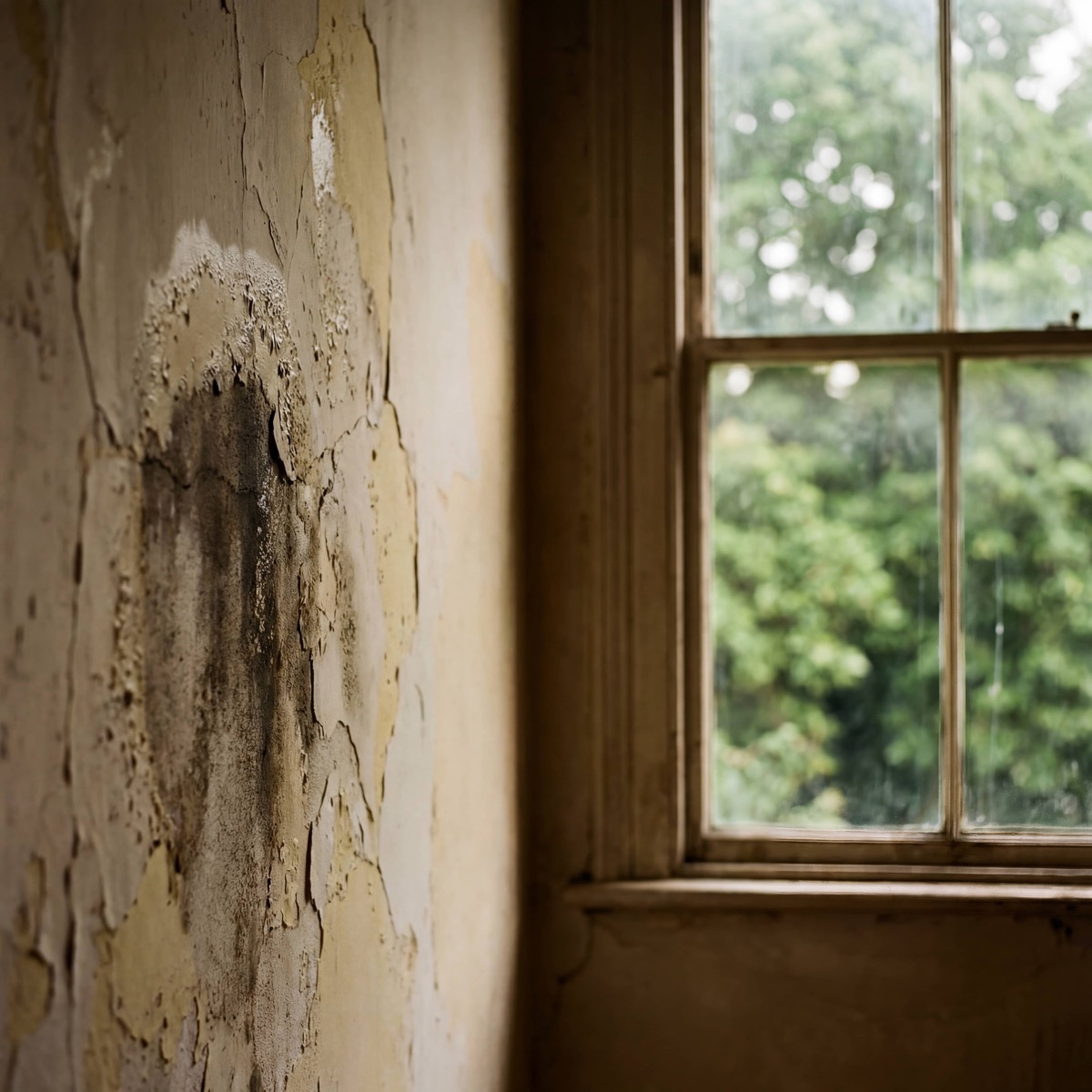
- Discolouration — yellowish-brown stains or dark patches on walls
- Peeling paint or bubbling wallpaper — moisture pushing from behind
- Tide marks and salt deposits — classic sign of rising damp
- Black mould — in corners, behind furniture, around windows
- Wet or cold patches — run your hand along external walls
- Deteriorating plaster — crumbling or “blown” plaster
- Warped timber — skirting boards, floorboards, window frames
- Condensation on windows — persistent, especially mornings
We recommend inspections at least every six months, with additional checks after heavy rainfall — particularly for riverside properties and those with basements.
Treatment Options for Richmond Period Properties
Get a Proper Survey First
Commission a specialist damp survey — not a free survey from a damp-proofing company that profits from selling you a chemical DPC. Independent surveyors use moisture meters, thermal imaging, and salt analysis to determine the actual type of damp.
Treat the Cause, Not the Symptom
- Defective rainwater goods: Repair or replace leaking gutters and downpipes. In conservation areas, you may need cast-iron replacements.
- Failed pointing: Repoint with lime mortar, not cement. Cement traps moisture. This is critical in period properties and typically required in Richmond's conservation areas.
- Bridged DPC: Lower external ground levels. One of the simplest and most effective fixes.
- Blocked ventilation: Reinstate airbricks, open sealed fireplaces, install trickle vents in replacement windows.
Conservation Area Considerations
Article 4 Directions restrict: replacing windows or doors, altering roof materials, changing front elevations, removing boundary walls. Damp remediation must use materials sympathetic to the building's character — lime-based renders and mortars, traditional paint finishes, like-for-like replacements.
Condensation Management
- Improve ventilation: Mechanical extraction in bathrooms and kitchens. Consider positive input ventilation (PIV) systems.
- Improve insulation: Breathable internal wall insulation (wood fibre board and lime plaster, not foil-backed plasterboard).
- Maintain heating: Ensure heating systems are efficient and affordable to run.
Flood Risk in Richmond: What Landlords Need to Know
Around 4,753 properties in the London Borough of Richmond upon Thames are at risk from river flooding. A further 681 face high risk from surface water flooding.
Properties closest to the Thames — around Richmond Bridge, Petersham Meadows, Twickenham riverside, and near Richmond Lock — face the highest risk. Basement properties anywhere in the borough face heightened groundwater risk after extended wet periods.
What landlords should do:
- Check your flood risk using the Environment Agency's online tool
- Install preventive measures: non-return valves, sump pumps, flood-resistant finishes
- Have a flood plan for shutting utilities and communicating with tenants
- Review insurance annually to ensure flood damage is covered
How 5D Gryphon Handles Damp for Richmond Landlords
We manage properties across Richmond with a focus on proactive maintenance and compliance through our property management in Richmond service.
- Regular inspections. We inspect proactively, not just when tenants complain. We catch problems when they are small and cheap to fix.
- Specialist contractor network. Heritage-accredited surveyors and contractors who understand lime mortar, breathable construction, and conservation area requirements.
- Full documentation. Every inspection, report, investigation, and repair is logged with dates, photographs, and written summaries — your complete audit trail.
- Compliance management. We track the legal timeframes (24 hours for emergencies, 10 working days for investigation, 5 working days for repairs) and keep your property within them.
- End-to-end service. From damp survey through to remediation and ongoing monitoring.
If you are a Richmond landlord dealing with damp — or you want to make sure you never have to — get in touch. We are based at 21 Knightsbridge, London SW1X 7LY, and we manage properties across Richmond, Kew, Sheen, Petersham, and Twickenham.
This article is for general information only and does not constitute legal advice. Always seek independent legal advice for your specific circumstances.